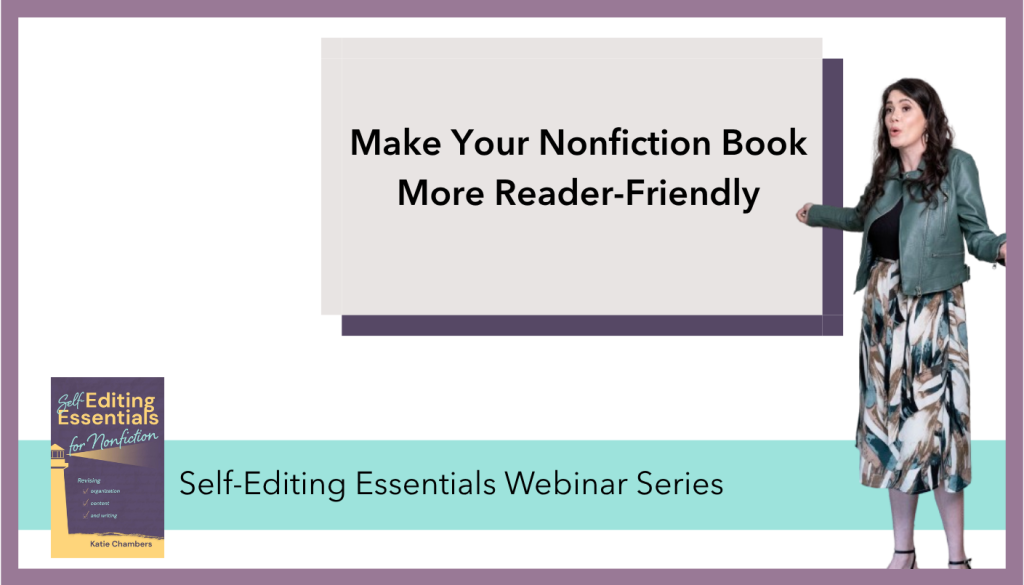
Your book should help readers, not make them work too hard to understand you.
Many nonfiction authors accidentally make their books harder to read by:
- relying too heavily on dry facts
- using academic or professional jargon
- writing like they’re explaining ideas to colleagues instead of everyday readers
- repeating ideas without realizing it
- skipping examples readers need in order to fully understand the concept
- organizing information in the order it came to mind instead of the order readers need it
- teaching ideas without giving readers clear ways to apply them
These mistakes are incredibly common. Especially for experts.
When you know your topic deeply, it’s easy to forget what your reader doesn’t know yet, to assume the connection is obvious, to explain without the application.
This webinar helps you step back and ask: “Is this written in a way my reader can follow, connect with, and use?” So you can ensure your book is engaging, useful, and reader-focused.
Learn three core strategies for improving nonfiction readability: use stories, avoid sounding too academic, and involve the reader. Through before-and-after expmples, you’ll see what this looks like on the page and how to edit your nonfiction book to ensure all three strategies are used throughout. Then you get additional information based on viewer questions when I presented this live.
This webinar is for you if…
You’re writing or revising a nonfiction book and you want it to be easier to read, easier to follow, and more useful for your audience.
It’s especially helpful if you’re writing:
- a self-help book
- a how-to book
- a business book
- a leadership book
- a health or wellness book
- a teaching-based book
- a thought leadership book
- a book connected to your coaching, speaking, or service-based business
It’s also a great fit if you know your topic well but worry your writing may be too dry, too dense, too academic, or too “inside your own head.”
What you’ll walk away with
By the end of this webinar, you’ll know how to:
➔ use stories to make your concepts more engaging
➔ tell the difference between helpful jargon and unnecessary jargon
➔ revise academic-sounding writing into clear, accessible prose
➔ replace thesis-like chapter openings with stronger, more useful introductions
➔ use “you” language to speak directly to the reader
➔ add reflection questions or action steps that help readers apply your ideas
You’ll also get practical editing steps you can use as you review your own book.
Bonus resources included
When you sign up, you’ll also receive supporting materials to help you apply what you learn, including:
 Practice example and my revsion Reader-friendly editing steps you can apply to your manuscript Additional resources Presentation slides
Ready to make your nonfiction book more reader-friendly?
Your book has a message worth sharing, But the way you present that message matters.
If your reader has to fight through jargon, repetition, dry explanations, or confusing organization, they may never fully receive the help you’re trying to give them. This webinar will show you how to revise with your reader in mind—so your book becomes clearer, more engaging, and more useful from beginning to end.
Sign up for Make Your Nonfiction Book More Reader-Friendly and learn how to turn your expertise into a book readers can actually connect with.
Webinar Details
Course Instructor
